Food & Fibre Gippsland Attends Gippsland New Energy Conference 2025
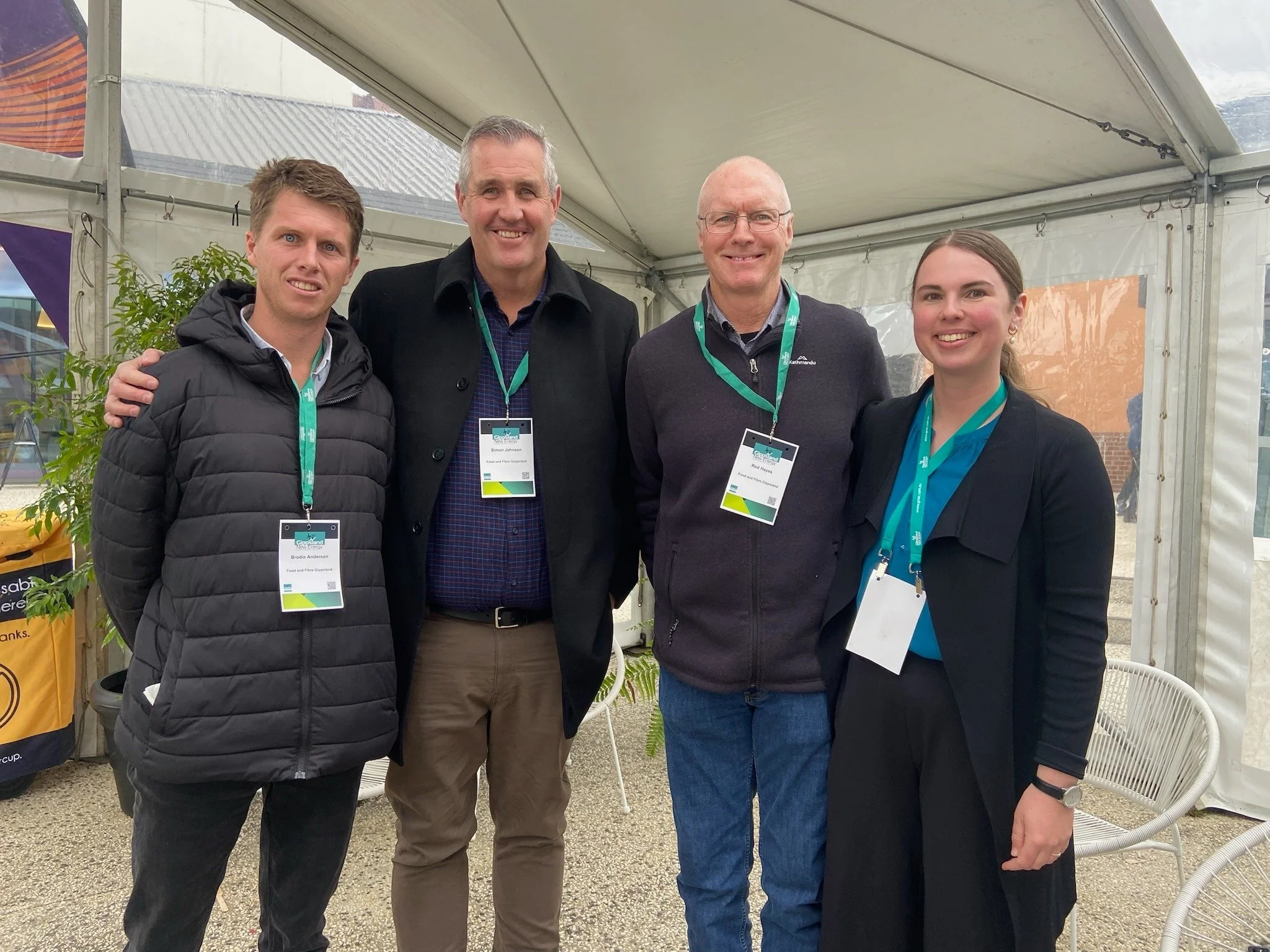
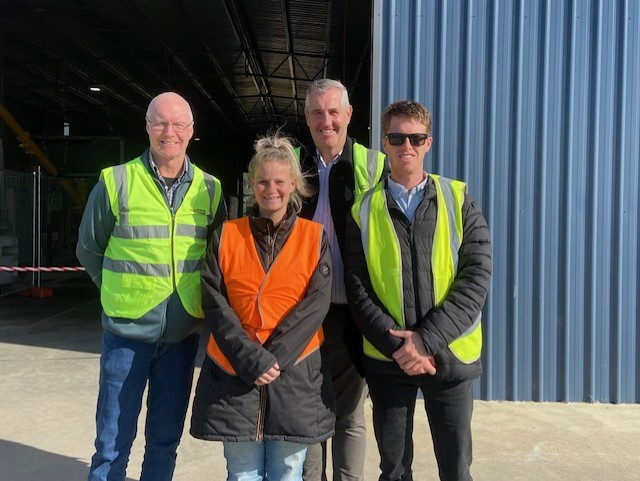
The Food & Fibre Gippsland (F&FG) team recently attended the 2025 Gippsland New Energy Conference (GNEC25), held on 10 and 11 September at the Traralgon Arts Centre, with CEO Simon Johnson and staff, Brodie Anderson, Amanda Gould, and Rod Hayes participating.
GNEC25 brought together industry leaders, innovators, community groups, and government representatives to accelerate the region’s transition to renewable energy.
On the Wednesday afternoon, the F&FG team participated in a dynamic forum focused on renewable energy in agriculture, exploring how new technologies are transforming Gippsland farms. The forum featured presentations from expert speakers and pioneering farmers on topics including:
Current renewable energy solutions transforming Gippsland farms;
Innovations underway at Ellinbank Research Farm;
Smart Box technology reducing costs and boosting productivity;
Community-driven circular economy initiatives;
How dairy farmers are using renewables to slash energy costs.
A standout of GNEC25 was the inaugural Regional Renewables Farm Forum & Tour showcasing Innovation on Gippsland Farms, facilitated by Kaylene Wickham and Mark Coleman. The tour gave F&FG staff firsthand exposure to cutting-edge on-farm renewable energy applications and the practical benefits they deliver.
First stop on the bus tour was at Chris Freney’s Glengarry broiler farm. Chris is a meat chicken farmer, the founder of C-Loop Power and Thermal, and General Manager of Full Circle Agri in Toongabbie, which operates under long-term agreements with Ingham's. His mission is to promote a closed-loop farming model that transforms organic farm waste into baseload renewable energy, industrial gases, and natural food dyes from microalgae. The C-Loop system, currently awaiting EPA approval, uses anaerobic digestion to produce biogas for electricity generation. Its by-products, carbon dioxide and nutrient-rich digestate, are used to cultivate microalgae, which are processed into food-grade colorants. This approach results in carbon-negative products, helping reduce emissions and energy costs while enhancing farm performance. Chris’s innovative integration of renewable energy, waste reuse, and value-added products showcased the potential of medium-scale, family-run farms to contribute meaningfully to sustainability and agricultural efficiency.
The second tour stop was at Hooper Farms in Winnindoo, near Heyfield. This family-run enterprise is highly diversified, managing:
Nearly 3,000 dairy cows
Over 1,300 calves
Two 400,000-bird chicken broiler farms
Crop production
A local quarry
Hooper Farms have invested heavily in renewable energy, operating over 1 MW of solar power across irrigation systems, dairies, and chicken farms.
They also practice water recycling, capturing effluent and runoff in reuse dams for irrigation. Additionally, they compost chicken litter on-site, helping to close the loop, reduce input costs, and enhance sustainability. Hopper Farm’s approach highlights how large-scale, family-operated farms can integrate renewable energy and circular practices to improve efficiency and environmental outcomes.
After a delicious lunch enjoying locally grown fresh produce at the Tinamba Hotel, the bus tour continued on to Alister and Katie Clyne’s Hillside Dairies, located in Tinamba West.
In July 2023, they transitioned from a traditional 50-unit rotary dairy to one of Australia’s largest robotic milking facilities, installing 16 DeLaval VMS V300 robots. Alister’s vision was to build a high-performance, pasture-based robotic dairy capable of efficiently managing 1,200 cows, reducing labour fatigue, and future-proofing the business. The new shed, located beside the existing rotary dairy, includes 24 feeding stations and supports 24-hour operation, prioritising animal welfare and farm efficiency. With a grazing area of over 250 hectares, Hillside Dairies exemplifies how modern technology can be integrated into traditional farming to enhance productivity and sustainability.
Our final visit was to ElecSome’s innovative solar panel recycling site in Kilmany, where we had an informative tour with site manager Marc Murphy. ElecSome is a pioneering company that upcycles end-of-life (EoL) solar panels into premium, high-value products for the construction and manufacturing industries. Using patented technology, they recover materials like glass, silicon, polymers, aluminium, copper, and silver, transforming them into items such as high-grade concrete, cables, PV/battery-grade silicon, and recyclable consumables. This process offers a sustainable alternative to landfill, improving the benefit-to-cost ratio in solar energy lifecycle management.
On our return trip Ash Hall gave an informative update on the Traralgon Regional Aquatic Centre (GRAC) featuring Victoria’s first geothermal heating system in a public aquatic facility. This system draws heat from underground water in the Latrobe Valley aquifer via a deep-bore setup, significantly reducing energy costs and carbon emissions, and showcasing a forward-thinking approach to environmental responsibility in community spaces.
The tour reinforced to the F&FG team how Gippsland farmer businesses are integrating renewable energy, water-saving technologies, and automation to:
Reduce fuel and electricity input costs;
Improve efficiency and productivity;
Lower carbon emissions;
Manage biosecurity and resource sustainability;
Build resilience in their business operations.