Gippsland Producers Turn to Multi‑Species Pastures to Strengthen Climate Resilience
Gippsland farmers are increasingly searching for practical ways to build resilience as they face rising climate volatility, from prolonged dry spells to unpredictable storms and flooding. These pressures, combined with longstanding challenges such as feed gaps, low soil productivity and tight margins, are driving producers to explore new approaches to pasture and land management.
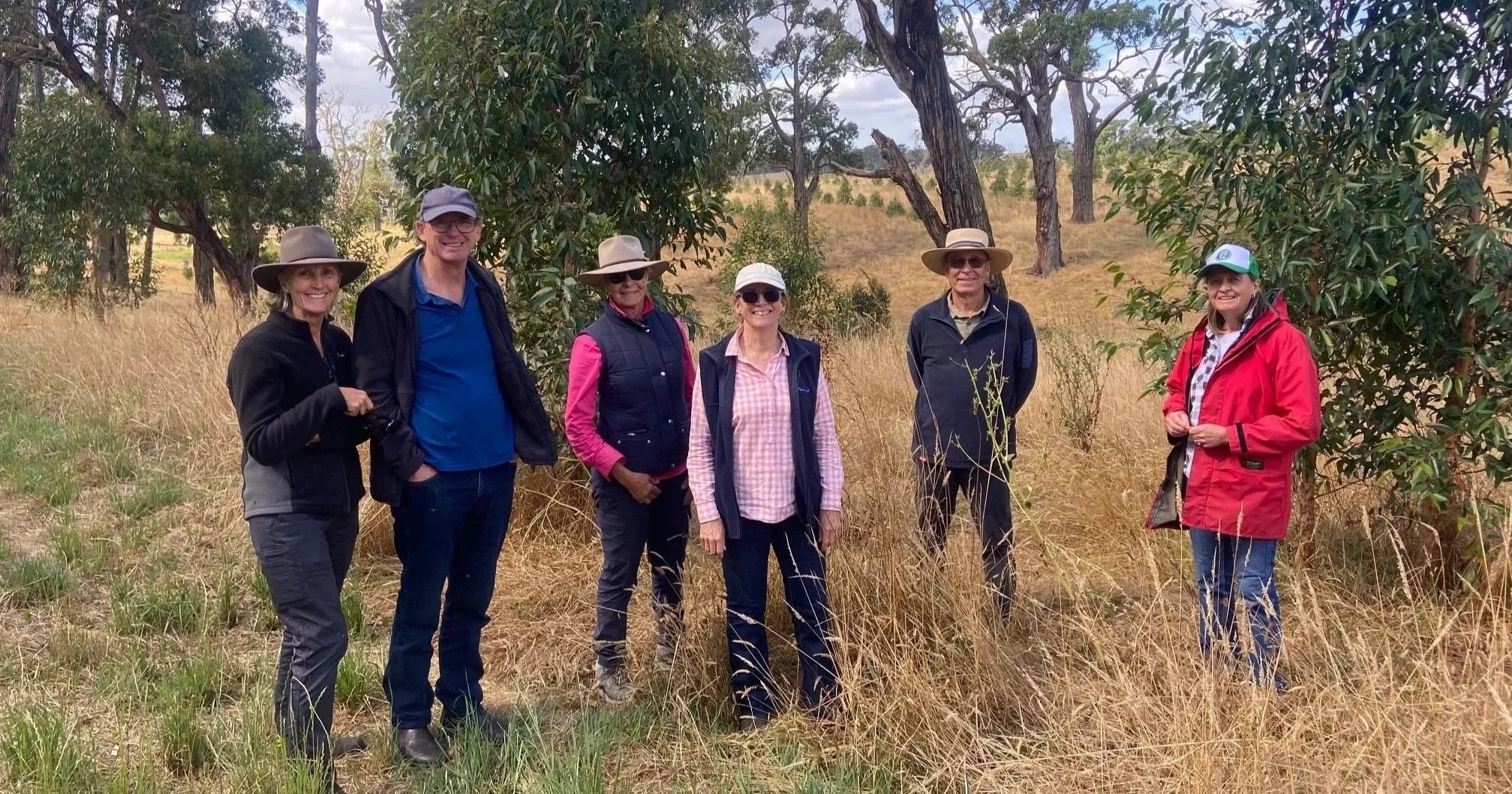
One promising pathway was on full display at Bass Coast Landcare Network’s multi-species pastures field day on 12 February 2026. Held at the Almurta property of Janette and Andrew Allen, the event brought together local producers, agronomists and industry representatives, including Food & Fibre Gippsland’s Drought Hub South East Node representative, Rod Hayes.
A Regenerative Vision for a Family Farm
Janette and Andrew opened the event by sharing their family’s long-term vision for transitioning their beef operation toward regenerative agriculture. Their goal is clear: build a healthier, more resilient farm that supports productive cattle, thriving soils and a stronger business for future generations.
They explained how multi-species pastures are being introduced strategically to address seasonal feed shortages, improve soil structure, and increase moisture retention across their diverse landscape. These pastures also support greater biodiversity—one of the Allens’ core principles as they reshape their enterprise for a more variable climate.
“Our family has been farming here for generations, and we want to leave this land in better shape than we found it. This trial is giving us real insight into how we can close feed gaps, improve soil function and manage seasonal extremes more confidently.” —Janette & Andrew Allan
Inside the Multi-Species Pasture Project
The field day centred around a detailed look at the Allens’ split-paddock project, guided by multispecies consultant Jade Killoran (Healthy Farming Systems) and supported by soil scientist and consultant Declan McDonald (Regen Soils). The demonstration will run for 3 years and aims to compare a conventional pasture (sown to Italian ryegrass in 2024) with multispecies sown in 2025, 2026 and 2027.
The first sowing of the multispecies occurred in November 2025 with a blend made up by Jade comprising:
Millet
Brassicas (such as fodder rape and tillage radish)
Sunflowers
Buckwheat
Arrowleaf clover
These species were selected for their complementary functions—deep rooting, soil conditioning, nutrient scavenging and improved moisture-use efficiency, as well as their ability to support soil biological activity during the traditional summer dormancy phase and provide valuable green feed.
But the project has not been without challenge. A wet early summer planting window was followed by an extremely dry December–February period, compounded by kangaroo grazing pressure. Despite these setbacks, the mixed pasture is already showing differences in soil activity, groundcover, plant diversity and summer fodder production.
Learning from the Landscape
Participants spent the day discussing soil processes, grazing strategies, water infiltration and the economics of regenerative pasture systems. The conversation highlighted a clear trend: multi-species pastures are increasingly viewed as a viable tool for managing risk in a variable climate.
Key benefits identified included:
Better drought resilience
Improved soil structure and water-holding capacity
Enhanced biodiversity
Reduced reliance on single-species pastures and inputs
More reliable feed during summer and early autumn
An economic cost benefit analysis case study
The trial will continue over a three-year period, with side-by-side soil tests and production monitoring providing robust data for farmers evaluating similar transitions on their own properties.
A Growing Regional Movement
The event exemplified the value of local collaboration and knowledge-sharing as Gippsland producers work to develop more resilient farming systems. With weather extremes becoming more common, multi-species pastures are emerging as a promising approach to improve both ecological function and business sustainability.
For Gippsland producers seeking practical ways to adapt, the Allens’ paddock is fast becoming a valuable learning site—one demonstrating that even small changes in pasture strategy can lead to big gains in resilience.
Any questions?
Please reach out to Brodie Anderson, Project Manager - Resilience & Innovation and Vic Hub SE Node Lead or Rod Hayes, Senior Manager, Resilience & Innovation at info@foodandfibregippsland.com.au