CASE STUDY: Gippsland Producers Explore Multi‑Species Pastures to Build Climate Resilience
Overview
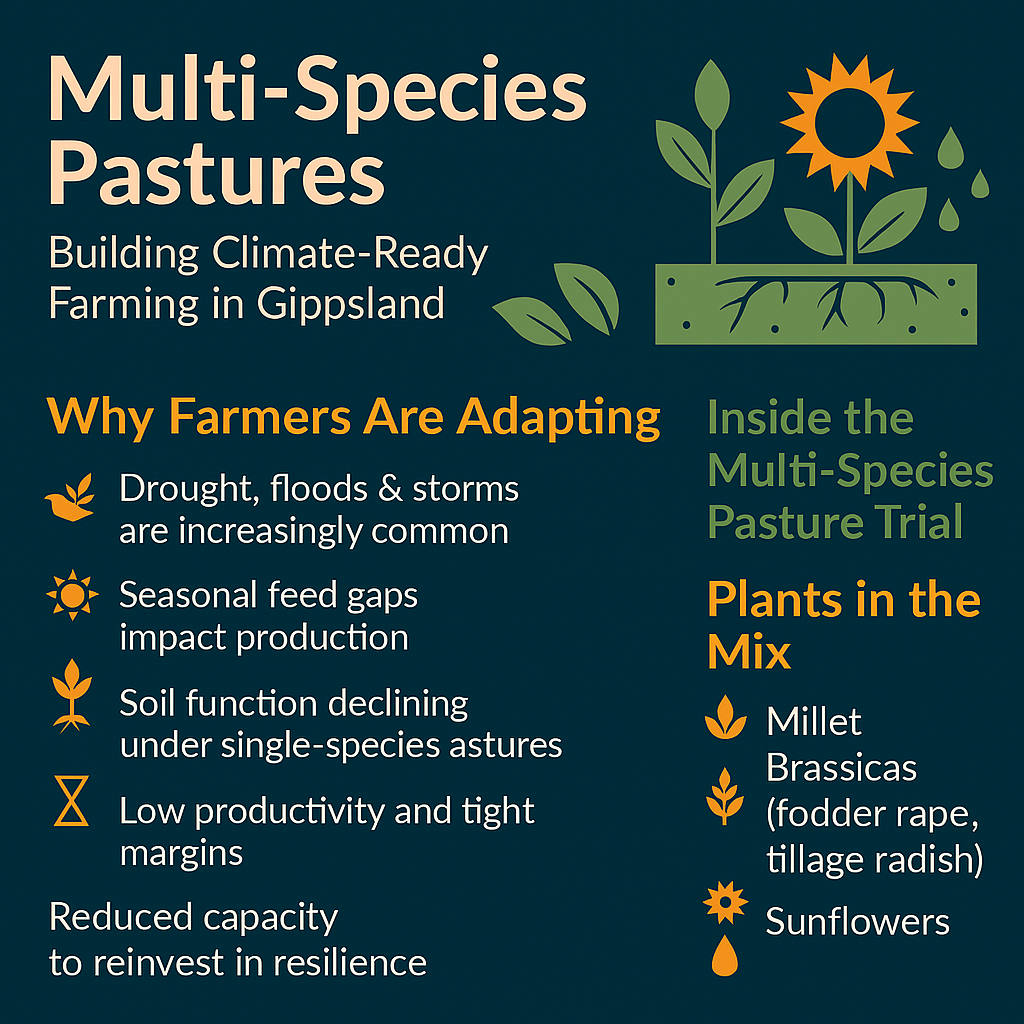
Gippsland’s agricultural sector is facing increasing pressure from climate volatility, including drought, fire, floods and storms. These environmental challenges compound long‑standing constraints such as seasonal feed gaps, soil limitations, inefficient land use and sub‑optimal returns on capital investment. Collectively, these factors undermine producers’ capacity to manage risk, maintain productivity and reinvest in resilient farm systems.
In response, local producers are exploring multispecies pasture systems as a practical pathway to enhance soil health, improve feed reliability and strengthen long-term business viability.
Background
On 12 February 2026, Food & Fibre Gippsland’s South East Node representative Rod Hayes joined producers at Bass Coast Landcare Network’s multispecies pasture field day. Hosted at the Almurta property of Janette and Andrew Allan, the event demonstrated how diverse pasture mixes can be integrated into beef and dairy systems to address climate and productivity challenges.
The demonstration concept was co-developed by:
Joel Geoghegan, Bass Coast Landcare Network
Jade Killoran, Healthy Farming Systems
The aim: to test whether functionally diverse pasture mixes can offer agronomic, ecological and economic benefits compared with traditional ryegrass systems.
Farm Vision and Transition
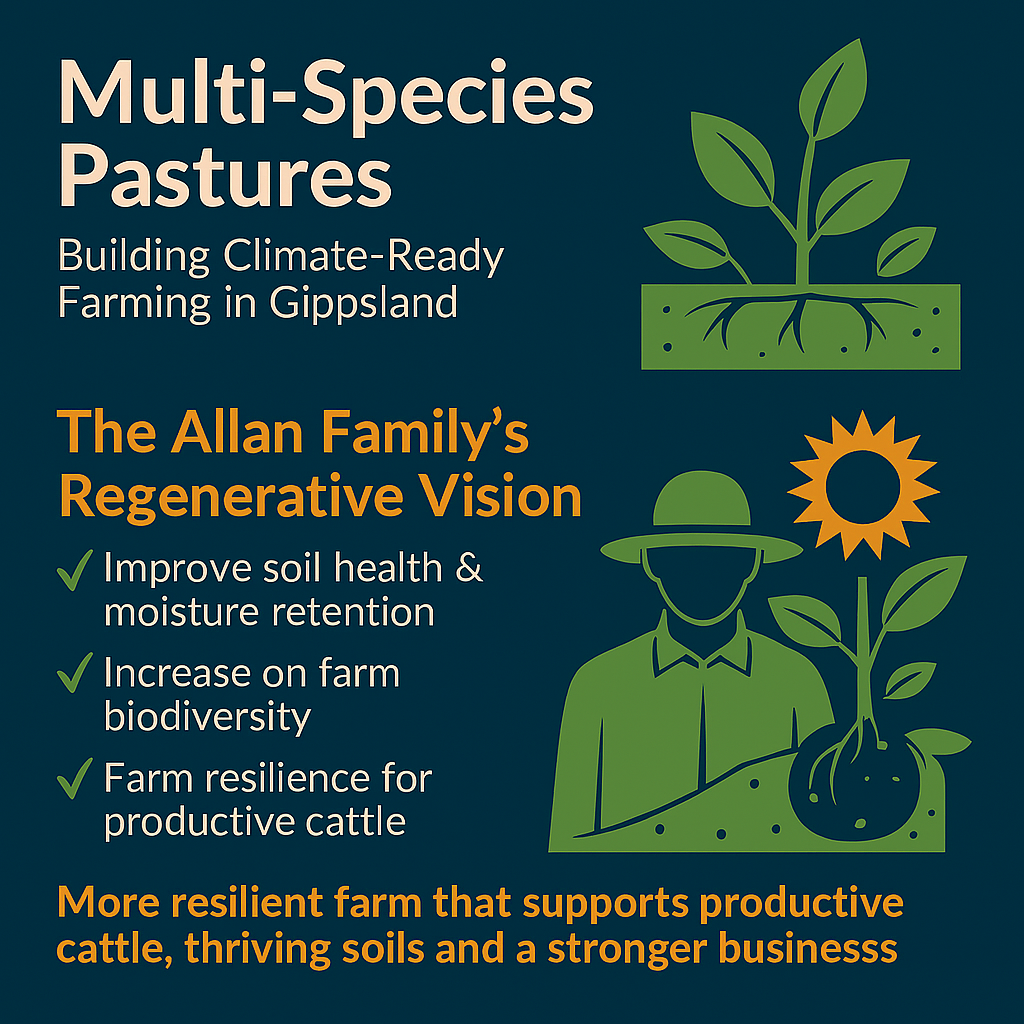
Janette and Andrew Allan opened the field day by outlining their long-term vision for transitioning their beef enterprise toward regenerative agriculture. Their goals include:
Improving soil function and structure
Enhancing biodiversity
Closing seasonal feed gaps
Increasing water-holding capacity
Strengthening long-term business resilience
Creating pathways for successful family succession
Multispecies pastures are becoming an integral part of their strategy to manage variable moisture conditions, soil acidity and inconsistent summer feed availability—all while maintaining a profitable beef system.
“Our family has been farming here for generations, and we want to leave this land in better shape than we found it. Integrating multispecies pastures is helping us build a healthier, more resilient farm that supports our cattle, our soils and the broader environment. This trial is giving us real insight into how we can close feed gaps, improve soil function and manage seasonal extremes more confidently. We’re excited to share our journey because many other farmers are facing similar challenges—and if our experience can help others strengthen their own systems, then that’s a win for the whole community.”
— Janette & Andrew Allan
The Demonstration Trial
Technical leads Jade Killoran (Healthy Farming Systems) and Declan McDonald (Regen Soils) guided participants through the design and purpose of the split‑paddock trial.
Trial Design
The paddock is divided into:
Conventional ryegrass-based pasture
Functionally diverse multispecies mix, including:
Millet
Brassicas (tillage radish, fodder rape)
Sunflowers
Buckwheat
Site Characteristics
The trial addresses:
Acidic, low-nutrient duplex soils
Historically low responsiveness to traditional lime and fertiliser programs
Variable moisture availability
To support establishment, the paddock received:
Lime
Poultry manure
Targeted soil amendments
Seasonal Challenges
The trial was established during a difficult season marked by:
A wet early‑summer planting window
A very dry December–February period
Significant kangaroo grazing pressure due to widespread feed scarcity
Despite these limitations, early observations provide valuable insights into pasture function and system resilience.
Learning Outcomes
Participants engaged in in‑paddock discussions related to:
Soil processes and biological activity
Grazing management in dry seasons
Groundcover and root‑system function
Water infiltration and moisture retention
Comparative production performance
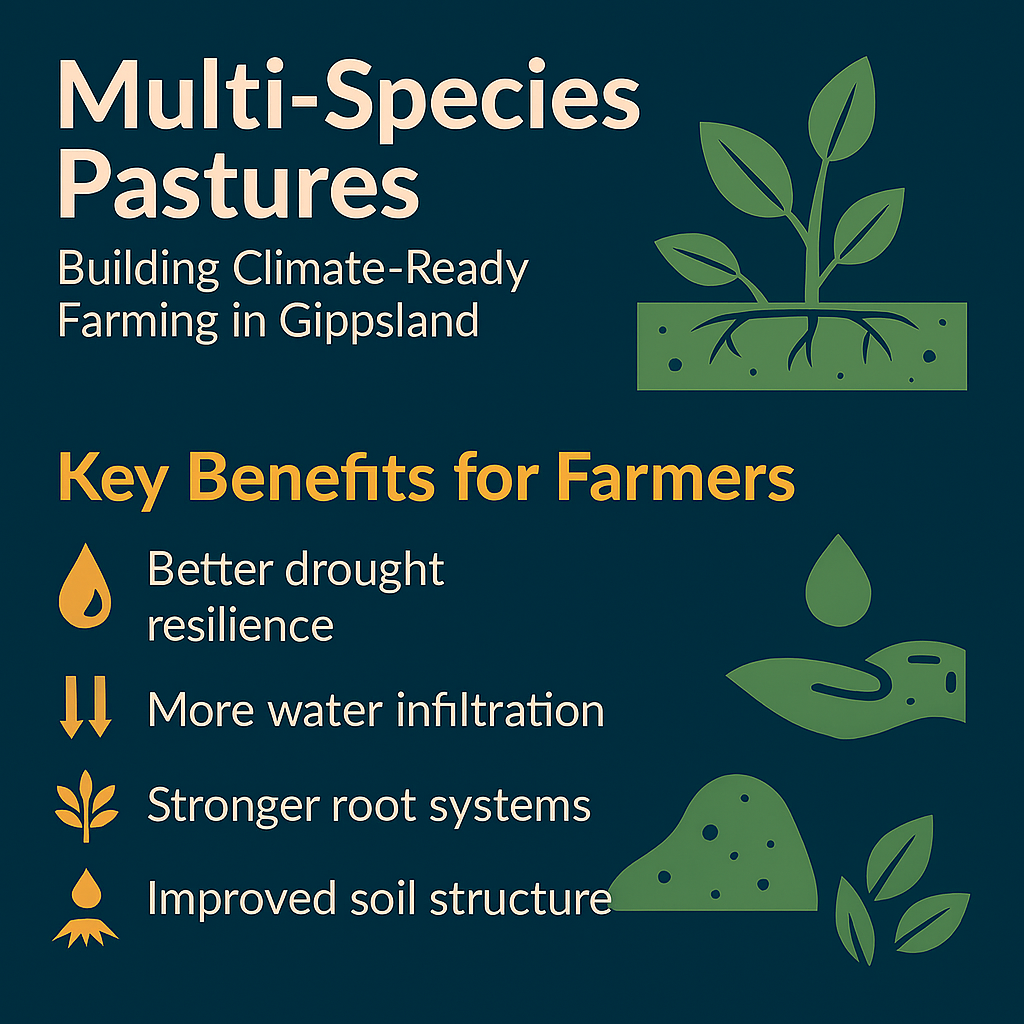
Key benefits identified for multispecies systems included:
Improved drought resilience
Increased water‑holding capacity
Enhanced soil structure and organic matter
More reliable summer feed supply
Greater species diversity supporting ecosystem health
Monitoring is being conducted through a side-by-side control comparison, measuring:
Biomass production
Pasture quality
Soil function changes
Species composition
Repeat soil testing over a three‑year period to quantify both economic and soil health outcomes
Conclusion
The Bass Coast Landcare multispecies pasture field day showcased practical, evidence-based pathways for Gippsland producers seeking to adapt to increasingly variable climatic conditions. By demonstrating real-world comparisons between conventional and diverse pasture systems, the trial is helping build regional knowledge, confidence and capacity to implement regenerative and climate-ready farming practices.
The Allan family’s leadership - and their willingness to share both successes and challenges - is providing valuable insights for producers across Gippsland who are navigating similar pressures and seeking resilient, productive and sustainable farming solutions.