Gippsland Leads the Way in Advancing a Local Industrial Hemp Industry
Update (December 15, 2025): This article has been revised to include new insights from the recent Global Hemp Summit on December 10-12.
Gippsland is emerging as a leader in the development of an industrial hemp industry, bringing together community, industry, government, and key organisations to explore opportunities for growth. After the inaugural Round Table in September in Tinamba, the work has advanced with an important meeting of minds and interest at the Orbost Hemp Forum this month (November 18-19). Representatives from the Future of Orbost & District Project, Victorian Hemp Association, Australian Hemp Council, iHemp Victoria, Australian Industrial Hemp Alliance, Australian Hemp Manufacturing Co, and Food & Fibre Gippsland joined forces with local stakeholders to advance collaboration and continue to chart a path forward.
In these early stages of development, the forum focused on feasibility and viability for an industrial hemp sector in Gippsland, identifying priority areas that will shape the next steps for this transformative initiative.
Key Focus Areas for Development
Orbost Hemp Hub
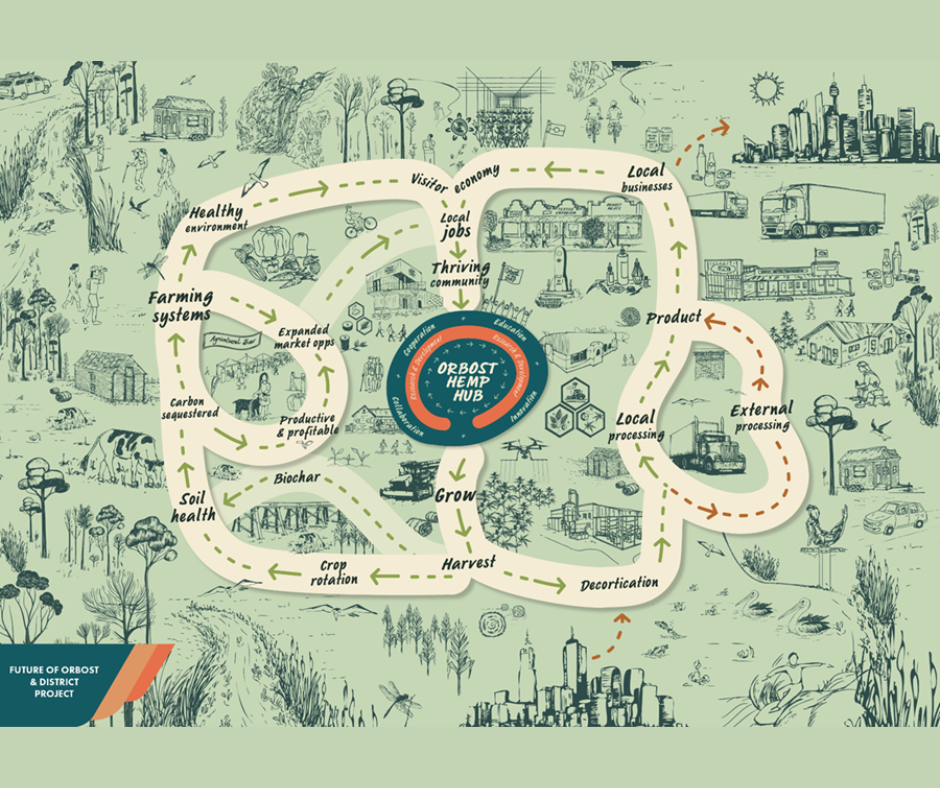
The discussions included leveraging local strengths, and existing assets and resources, for the construction of a local Hemp Hub. This includes former mill sites, advanced manufacturing capabilities, farming expertise, logistics, and strong community support. The hub would coordinate regional capability, research and development, commercialisation, and community collaboration.
Transforming Existing Infrastructure
The proposal to repurpose former mill sites will need to consider intent of current owners, feasibility studies, process design, scalability, operational costs, job creation, market demand analysis, and business model development These factors could lead to an investment prospectus aimed at securing funding.
The Seed Supply Challenge — and the Regional Opportunity
It was highlighted that in Australia, seed remains one of the biggest constraints on scaling the hemp industry: imported varieties often aren’t perfectly matched to local latitude and photoperiod; end-use suitability is inconsistent; germination rates can be highly variable; and growers lack full transparency around quality, provenance and performance. These are system-level issues, not just agronomy problems — and they limit trust, yield and downstream product quality. There is a potential opportunity to leverage regional strengths in seed production and supply.
Expanding Local Trials
The need for testing seed varieties, learning more about optimizing production, considering the feasibility of irrigated vs non-irrigated production, wastewater irrigation, bioremediation potential, and harvesting techniques were considered as important to continue.
Exploring Innovation
Opportunities such as synthetic biology in retting processes and converting sea urchin shells into lime for hemp-based construction materials were also tabled for further exploration.
Regional Awareness and Engagement
Hosting community events, festivals, and creative projects to showcase industrial hemp’s potential were discussed to continue to inform local communities and build engagement in the opportunities abounding this emerging industry.
Strengthening Collaboration
The roles of participating organisations were discussed including the central coordination role of Future of Orbost & District Project and
Food & Fibre Gippsland’s leadership in regional industry development and supporting the first hemp hub development. The Victorian Hemp Association and Australian Hemp Council identified the importance of ensuring the alignment of standards, traceability, and national coordination. The need to consider working groups and ongoing collaborations is essential.
Why Hemp Matters: Key Benefits
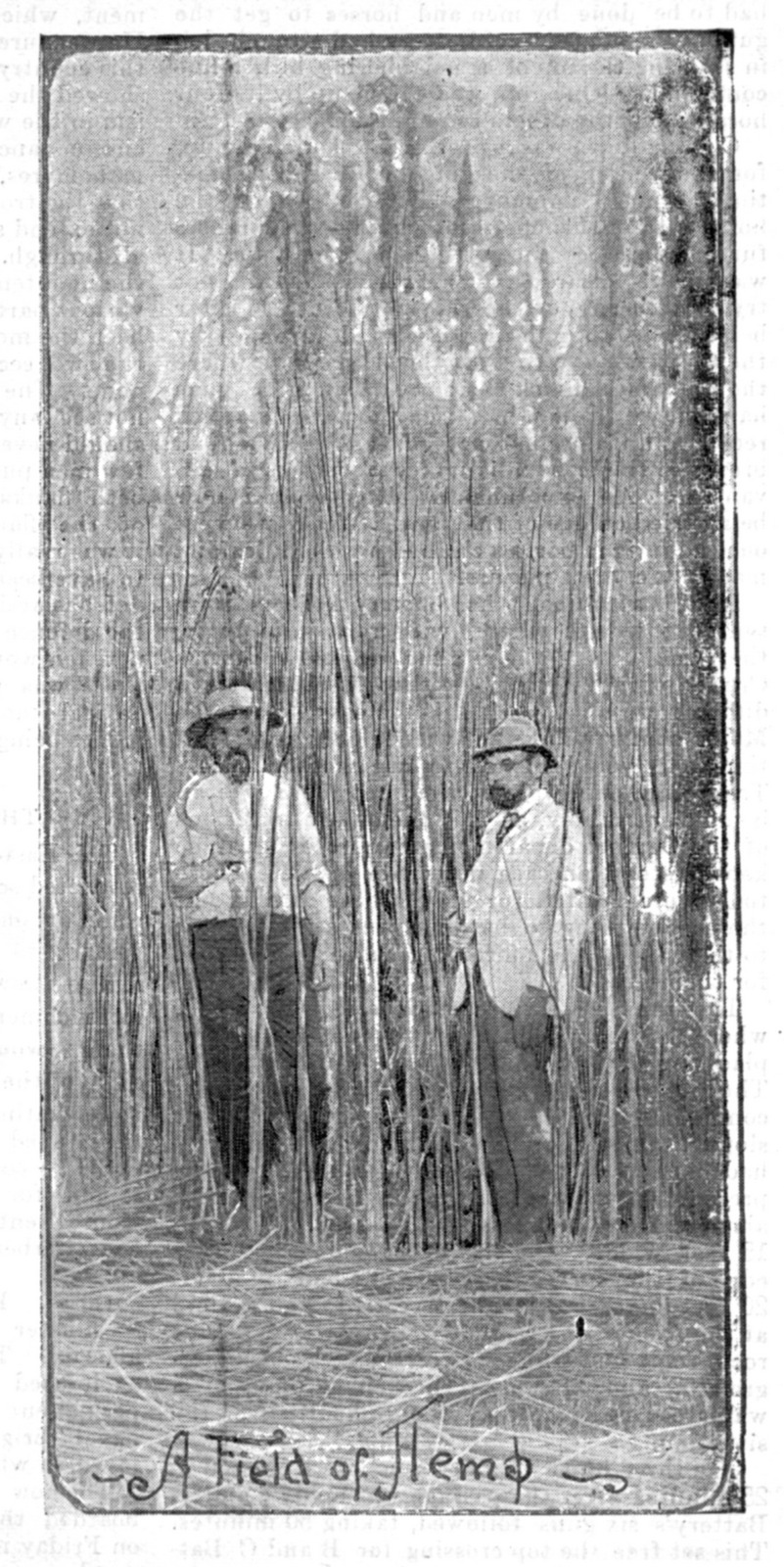
A regenerative, low-input crop: Hemp grows rapidly, suppresses weeds, improves soil structure, and requires fewer chemicals than many traditional crops.
Multiple value streams from one plant: Fibre, hurd, seed, oil, biomass, and biochar — hemp offers diverse commercial products from construction and textiles to nutraceuticals and biocomposites.
Climate-positive and carbon-smart: Hemp captures significant amounts of carbon per hectare and can replace carbon-intensive materials in building, plastics, and packaging.
A perfect fit for circular economies: Nearly every part of the plant can be used, reducing waste and enabling closed-loop, place-based manufacturing models.
Ideal for regional diversification: Hemp aligns naturally with regions transitioning from forestry or other fibre industries, leveraging existing skills in growing, processing, engineering, and logistics.
Builds local value chains, not just crops: Successful hemp industries generate new jobs across genetics, farming, harvesting, processing, product development, and advanced manufacturing.
A platform for innovation: From hempcrete panels to biopolymers, 3D-printed materials, and carbon-negative products, hemp is attracting innovators and early-stage commercialisation opportunities.
Hemp can deliver integrated outcomes and address multiple policy areas. However, its potential won’t be unlocked by individual businesses alone — it requires whole-of-value-chain development and a connected innovation ecosystem. Collaboration is the key, especially during these formative stages and Food & Fibre Gippsland can play a critical role as an independent regional umbrella organisation, connected to broader national and international innovation ecosystems and value chains while developing funding streams that will support evidence-based research and development.
Global Hemp Summit Presentation Activates Industry Collaboration
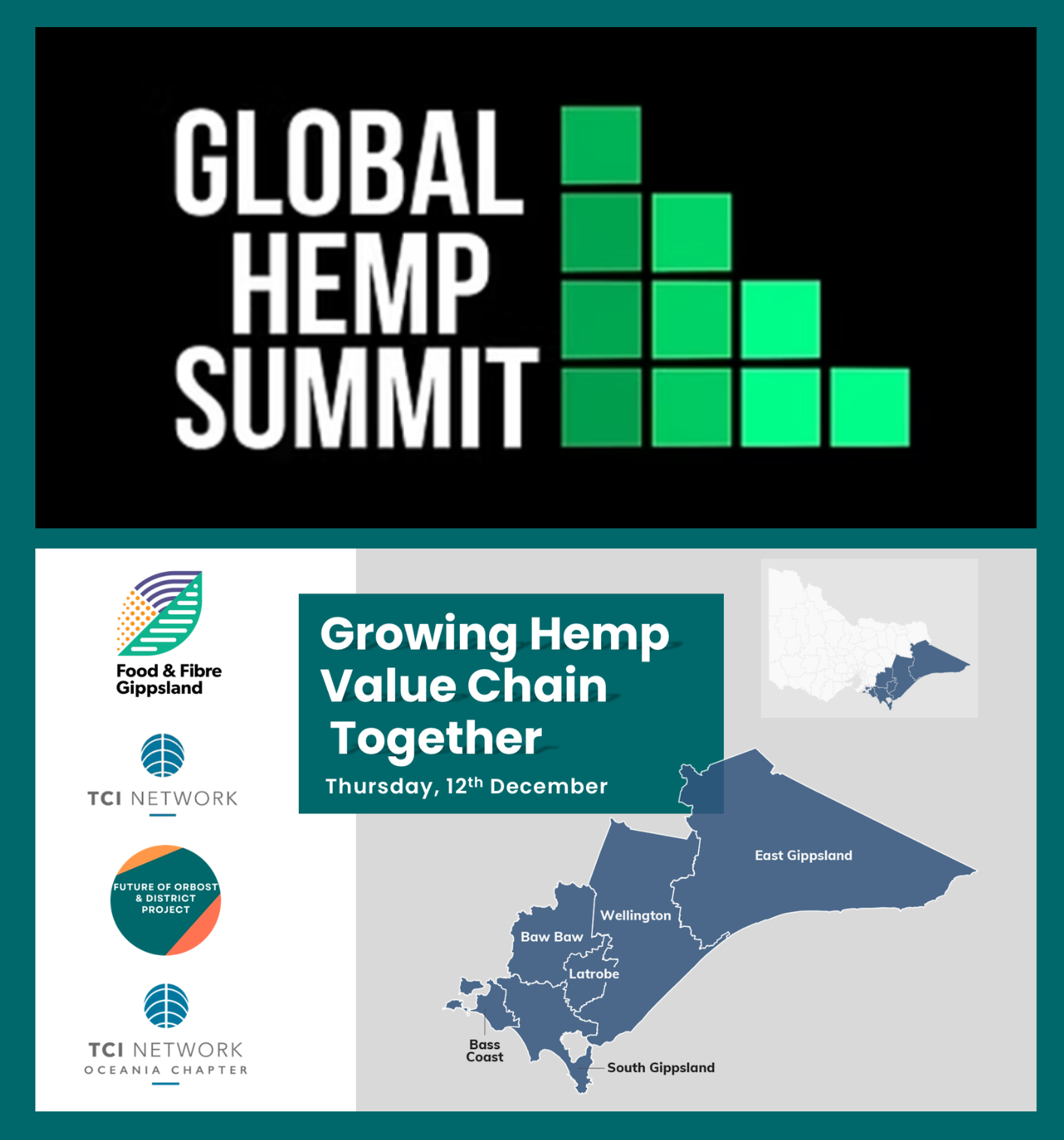
Update: Global Hemp Summit 10-12 Dec
Momentum continues to build and at the Global Hemp Summit, on December 10–12 at Lardner Park Events Centre industry leaders, world leading innovators, and stakeholders came together to discuss the future of hemp in Australia and beyond. With over 26 speakers including national and local representation and panel discussions, this event was another important step for this emerging industry.
Food and Fibre Gippsland was represented at the Summit, with a presentation together with Dr Nicola Watts from TCI Network Oceania and Future of Orbost & District Project, and Dr Mirjana Prica from TCI Network. Their presentation gave new focus to the extent the industrial hemp industry will benefit from local industry collaboration, as demonstrated through Clusters, a model designed to align common purpose with urgency and scale for impact.
This approach emphasises the importance of bringing leaders together to build capability and capacity in emerging industries. Industrial Hemp in Gippsland was highlighted as one such industry that had already begun undertaking significant collaboration and knowledge sharing to assess its feasibility and investment potential.