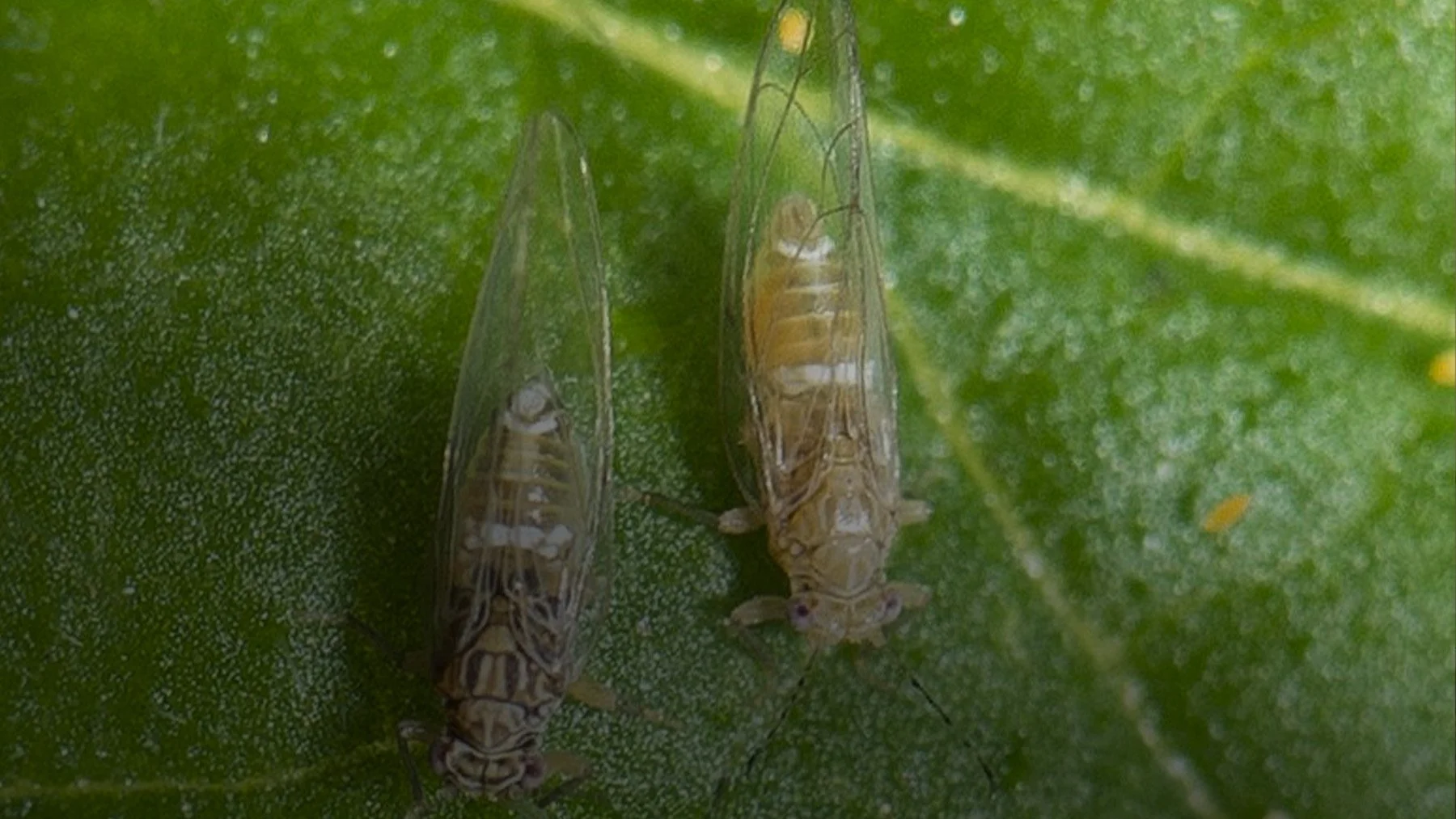
Image credit: Department of Primary Industries and Regional Development (DPIRD), Western Australia
The Gippsland horticulture community is navigating a period of significant change, with new Tomato Potato Psyllid (TPP) market access requirements coming into effect alongside the sudden closure of Dicky Bill’s Maffra operations. While these developments have created uncertainty for businesses and workers, coordinated regional efforts are emerging to support industry stability and workforce recovery.
New Movement Requirements for Host, Nursery Stock and Carrier Produce
Following the detection of Tomato Potato Psyllid outside the designated Restricted Area in October 2025, Victorian producers moving plants and produce interstate will soon be required to comply with updated market access arrangements. Agriculture Victoria has developed a suite of accreditation procedures to support the movement of host produce, host nursery stock, and carrier produce.
Host Produce & Host Nursery Stock
Host material—plants and planting material belonging to the Convolvulaceae and Solanaceae families—will fall under two new accreditation pathways from 1 December 2025.
PS-57: Treatment and Inspection of Host Nursery Stock for TPP
Sets out requirements for treating and inspecting nursery stock under accreditation.PS-58: Treatment, Inspection and Secure Consignment of Host Produce for TPP
Applies to host produce with attached leaves, calyx or other green material and outlines treatment, inspection and transport security requirements.
Both arrangements allow accredited businesses to self-certify consignments, providing an alternative to Plant Health Certificates issued by authorised officers. Businesses intending to continue interstate trade beyond 8 December will need to operate under these requirements.
Carrier Produce
For produce that is not considered a host but must still meet interstate entry conditions, PS-60: Inspection of Carrier Produce for TPP provides a pathway for inspection and certification under accreditation. This arrangement supports the movement of non-host fruit and vegetables to interstate markets.
Collectively, these procedures offer a structured, compliant framework that enables Victorian growers, packers and nurseries to maintain interstate access during a period of heightened biosecurity oversight.